In Indiana nurse midwives are required to have a collaborative physician in order to practice. For many midwives, finding a collaborative physician is one of the biggest obstacles to practice. Many physicians are not supportive of midwives or the midwifery model of care, some seeing midwives as an outdated model of care. Midwives are referenced in the bible in ancient times. This ancient model of care saw birth as a natural process. Women were taught from their mothers, aunts, grandmothers and other female family members and friends, supported and cared for during and after birth. When birth complications occurred, the woman or baby might succumb to the process. Modern medicine came into being to “save women”, right? In fact when birth moved into hospitals, maternal and neonatal mortality soared. Physicians were caring for sick people, perfoming autopsies, and delivering babies all in the same day, and since this was before germ theory and handwashing became predominant, the spread of deadly bacteria proliferated. Women died of puerperal, or childbed, fever frequently. Twilight sleep and ether drips were used to help with pain, many times causing the birthing woman to become out of control, and leather restraints were used to strap them to the bed to keep them from harming themselves and others. The use of natural methods of managing the discomforts of birth, such as walking, changing positions, meditation, and the presence of supportive family and friends were lost in the process. Birth became something that needed to be managed, and further away from a natural body process. Yet women and babies still die during childbirth.
Dr. Miller interviewed another physician, Dr. Stamm. When I heard that he was a physician in the Army at Blanchfield Army Community Hospital in Fort Campbell, Ky, my old stomping grounds, I knew that I had contacts there. One phone call to the midwife on duty to ask about this doctor gave me the answer I needed, “He is a good doctor, and he believes that midwives are ok as long as they know their place.” Their place. I know my place, next to women in labor, educating women, informing them of their options and rights. Would we agree on my place? We started our relationship with a commonality, the medical corps at the same base and hospital. We reminised about staff there, the base, the businesses in the area. I helped him learn about our nursing staff, other physicians, our practice, and my philosophy of care. He came to my house for a Derby Party and hung out with my family and friends. And then he started micromanaging me, telling me how to manage my patients, and refusing to back me up when he was on call. When my patients came in on his call days, I would have to get one of the other doctors to agree to back me on their day off or I couldn’t care for my patient, I would have to let him manage them. This did not set well with me or my patients. I talked to Dr. Miller, he was sympathetic, but he could not convince Dr. Stamm to support me.
The body is a pretty amazing thing. If a woman does not feel that she is in a safe, supported place her labor can stall or completely stop. This phenomenom happened over and over during this time, as a woman would call me with contractions during the night when Dr. Stamm was on call, and after talking to her about things she could do to stall her labor and discuss the policy of him managing and delivering my patients during his call shift, their labor would stall until morning when I came back on call. I missed a few births, but the majority waited for me. This time seemed to last forever. I considered seeking employment elsewhere, but that would require moving to another area since there were no other midwives in my area. I had reunited with my husband again, and he and my girls would not be receptive to the idea of moving away from family. So I took solace in the women I was able to help. And I looked forward to the nights that Dr. Miller and Dr. Grady were on call to back me.

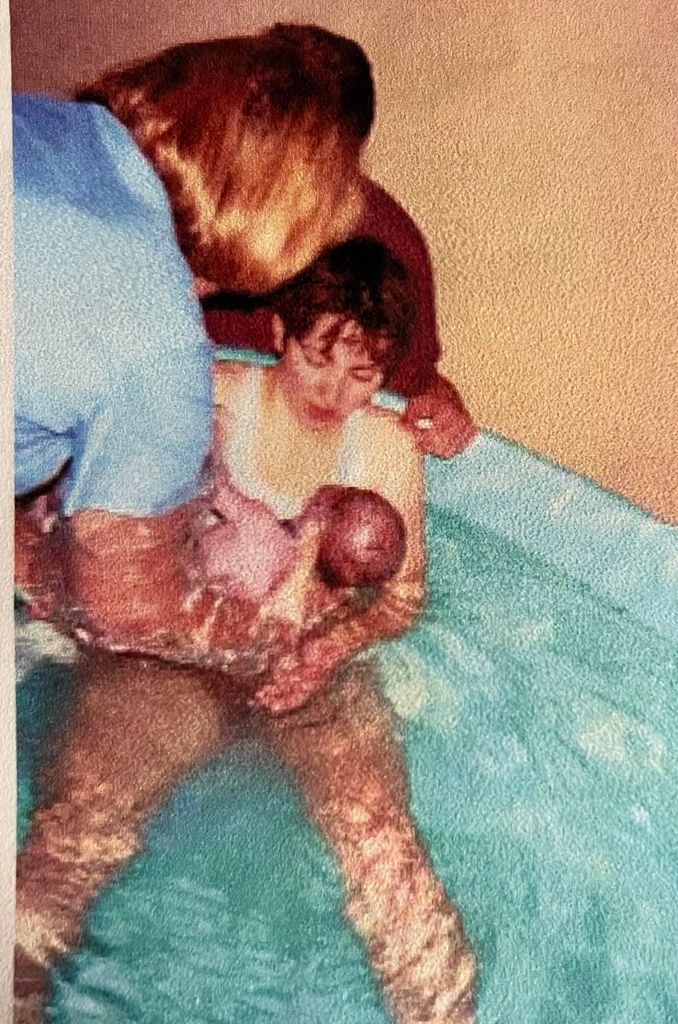
As I pushed the limits of the current rules to enable my patients to realize their birth plans, one of my patient’s request seemed a powerful hurdle to jump. Lainey, a momma expecting her 2nd baby, requested to have a waterbirth. Our labor rooms had showers for use during labor, tubs were not part of the design. I met with Lainey and we discussed options for accomplishing this request, and she educated me on the availabilty of portable tubs available for women doing homebirths. She did not desire a homebirth, hoping instead to have her waterbirth within the safety net of the hospital. We brainstormed scenarios that could make this a feesible option, and settled on the option we would present to the physicians and hospital administration. I pitched the idea and research to Dr. Miller first, and though initially reluctant, doubting the hospital would ever approve, he jumped onboard with me and accompanied me to the meeting with the administrators and risk management attorney. After a compelling presentation, they took the idea under advisement. I was certain this decision was solely to deny the request on paper, rather than delivering the denial in person. I went away from the meeting with the feeling that I had presented an intellegent argument, and should it be denied I would come back another day to present it again. My answer came in the form of a phone call from the OB director, they had approved the idea with some stipulations; engineering had to set up, fill and drain the tub in order to ensure the structure of the system. We set up a meeting with engineering to discuss all aspects of the process, and we made plans for our first waterbirth.
Writing policies, researching procedures, and educating nursing staff about waterbirth took flight. Lainey was due in 6 weeks, and we needed to be ready for this monumental event! When the day came, I received the call at 4 am, of course. Night shift engineering was on, and they had not been present for our meetings. I hurried into the hospital to supervise the project, only to find one guy from engineering standing over the tub box scratching his head. I grabbed the directions and started to bark orders at him for the construction of the tub. Things went smoothly once he had a mental picture, and the tub was filling in no time. When Lainey and her husband arrived we had the tub ready to go. Labor moved along smoothly as Lainey maneuvered around the tub into various positions, with her husband positioning himself as close as possible in order to support her in anyway needed. We supplied him with ice water and ice chips to help her stay hydrated, and cool cloths for her face. As her labor progressed, and she started to moan more loudly, I alerted the nurses, and we assembled in the room to await the event. Lainey moved freely in the water, changing from kneeling to leaning back with ease. During one of her moves, the head began to crown, and she assumed a squatting position. I donned my shoulder length gloves, and as the head emerged, encouraged Lainey to reach down and help the baby out. The vision of the baby’s face under water, eyes open, was an eery sight. As the baby was lifted out of the water, as the air hit the baby’s face, the most beautiful cry rung out. Lainey pulled the baby to her chest, hugging it tightly, and she breathed a huge sigh of relief. Our first waterbirth was a success!
My daughter Jaime had enrolled in college to study interior design, and had become engaged to her high school boyfriend. After several months of planning, a beautiful wedding took place on September 8, 2001. They chose Florida for their honeymoon destination. A few days later I was standing at the check in window at our Floyd Knobs office, waiting for my next patient to arrive. The waiting patients were watching the television in the waiting room when a news brief interrupted the morning show, showing an airplane flying straight into a building. “Oh no!” I said. “Where is that?” “New York,” one of them responded. “It’s the World Trade Center.” We were all mesmerized by this scene, and I went to the waiting area to watch the news further. As we all sat there in a daze watching this horrifying event, another place came into view and flew into the same building! As the news anchor reported on the story, and the origination of the planes, one of the patients started to become very upset, sobbing loudly. Her husband was on a plane en route to New York this morning, and she had no way of knowing if one of these was his plane. As we tried to console her, none of us could take our eyes off of this unfolding disaster. We were watching as the buildings started to collapse, and people scrambling to get away from it. We could not believe our eyes. We would learn about the lives lost, the heroism of the emergency personnel, speculation about responsible parties, and the grief of so many families. Later we would learn that our patient’s husband had not been on that plane, but was detoured to another airport and his flight home delayed. The next day I received a photo from Jaime, taken from her hotel room in Florida, of the numbers 911 scratched in the sand.
 Midwives empowering families
Leave a comment